Research
Nuclear AI Research: Straight Talk Where Nuclear and AI Meet
RTS research is written for people who have to act on it. Primary sources, practitioner interviews, and peer benchmarking. No vendor talking points, no hype, and numbers wherever numbers exist.
Browse research by category
Policy Papers · Market Overview · Applications · Technical · Case Studies
Research library
Every RTS paper, newest first.
Policy Papers · Report · September 2026
Nuclear AI as the Key to Part 53
How AI workflows fit the NRC’s risk-informed, performance-based framework for licensing advanced reactors, and what evidence Part 53 rewards.
Policy Papers · Recap · September 2026
NRC AI Workshop #7: From Pilots to Practice
What the NRC and industry said about moving AI from pilot to production, and what it means for your evidence package.
Policy Papers · Report · April 2026
The RTS Take on the RIC
What the NRC Regulatory Information Conference signalled for AI in licensing, oversight and operations.
Technical · Report · March 2026
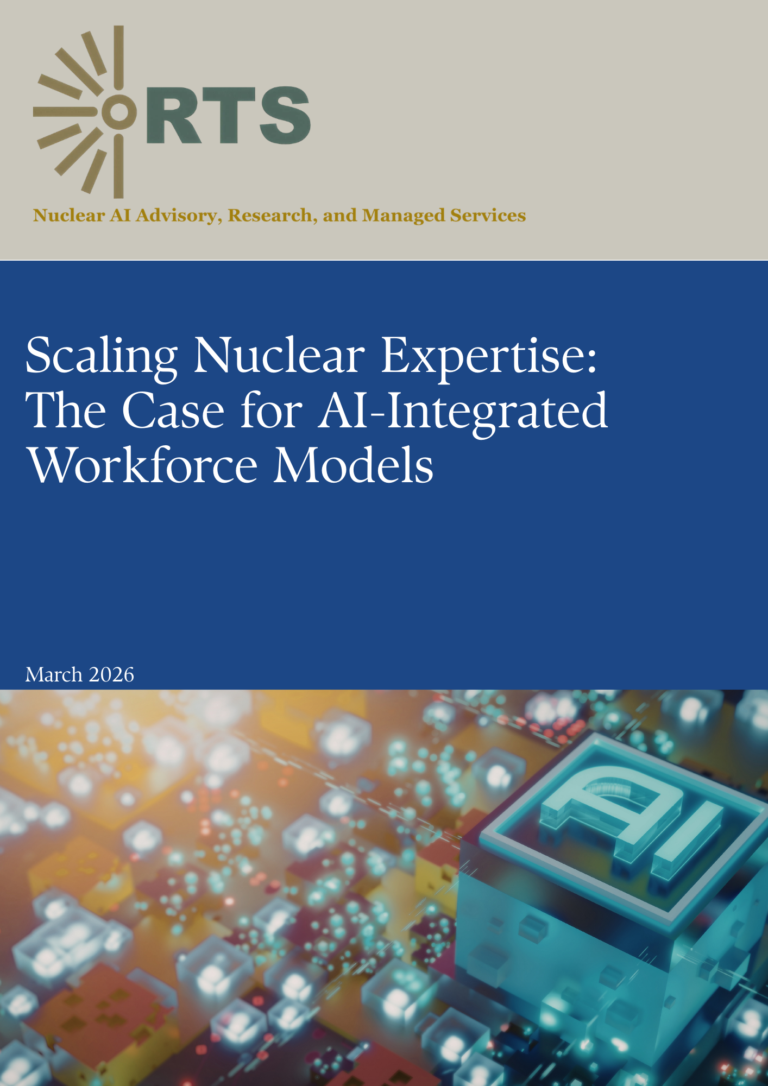
Scaling Nuclear Expertise: The Case for Workforce Models
How workforce models capture and scale scarce nuclear expertise, and how to validate them before they touch qualified work.
Policy Papers · Series · Multi-part
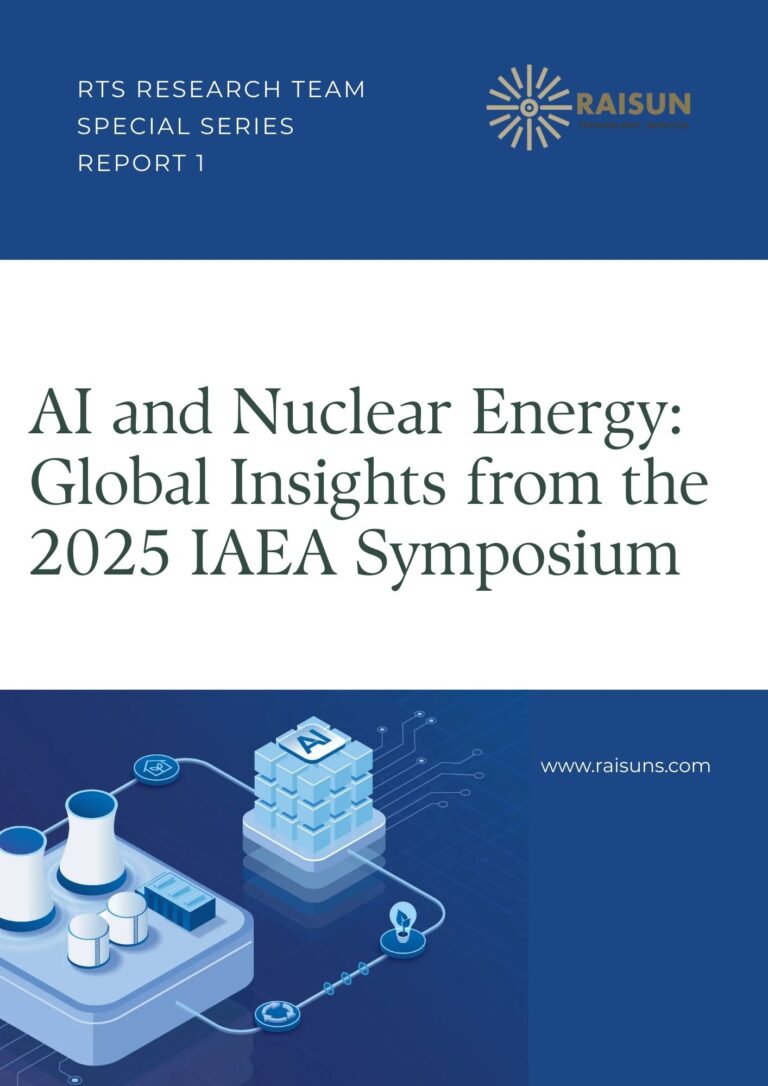
AI and Nuclear Energy: Global Insights
Regulatory signals and deployment lessons from operators outside the United States. Part one covers deployment under regulator scrutiny. Part two covers traceability standards and what they mean for your evidence package.
Applications · Report · November 2025
Nuclear Workforce Enablement
Time-to-qualification is the metric most training programs cannot move. This report separates the levers that actually shorten it from the ones that only look like work, drawing on simulator analytics and qualification pipeline data.
Applications · Report · November 2025
Nuclear Supply Chain with AI Intelligence
Where document automation pays back inside procurement and vendor qualification, and where it does not. Includes the evidence a supplier audit will ask to see.
Applications · Report · November 2025
AI-Enabled Nuclear Operations and Process Optimization
Where AI takes time out of plant operations and work management, and the controls that keep it defensible.
In progress for 2026
Two reports are in the field now. Tell RTS which one matters to your organization and it arrives the day it publishes.
Policy Papers · Coming soon · Report
Part 54: AI in License Renewal and Aging Management
10 CFR Part 54 governs license renewal and subsequent license renewal. This report examines where AI can compress aging management review and licensing basis document work, what the review actually requires, and what the NRC will expect to find in the record.
Market Overview · Coming soon · Annual report
The Nuclear Industry Report
A read on where the industry actually is with AI adoption. What is running in production, what stalled at pilot and why, and how maturity is distributed across operators, developers, and the supply chain.
Regulatory questions: Part 53, Part 54, and where AI actually fits
Yes, with conditions. AI can draft, search, cross-check, and assemble licensing material, but the licensee remains accountable for what is submitted. What matters to the NRC is traceability: which source produced which statement, who reviewed it, and whether the reviewer was qualified.
Part 53 is the NRC’s risk-informed, performance-based framework for licensing advanced reactors. It defines outcomes to be met rather than prescribing the design features that meet them, which rewards applicants who can demonstrate performance with evidence.
Part 54 governs license renewal and subsequent license renewal for operating reactors. It centers on aging management: showing that structures and components subject to aging effects will keep performing their intended function through the renewed period.
Mainly in the review load. Scoping and screening, aging management program cross-references, operating experience searches, and consistency checks across the licensing basis. The engineering judgment stays with the engineer.
How RTS researches
Primary sources first. Regulation, guidance, and the licensing record. RTS cites what it reads so you can check it.
Practitioner interviews. People who ran the outage, wrote the procedure, or owned the qualification pipeline. Anonymized on request.
Peer benchmarking. Findings normalized across organizations so a number means the same thing from one plant to the next.
Need research on something not listed?
RTS produces custom benchmarking reports, whitepapers, and NBIC summaries for organizations that need an answer specific to their fleet or their filing.